A lyophilized peptide vial is just a dry cake until you reconstitute it, and a surprising number of experiments start from the wrong concentration because the reconstitution arithmetic was done on the label mass instead of the net peptide content. This is a handling-and-calculation guide for research contexts only.
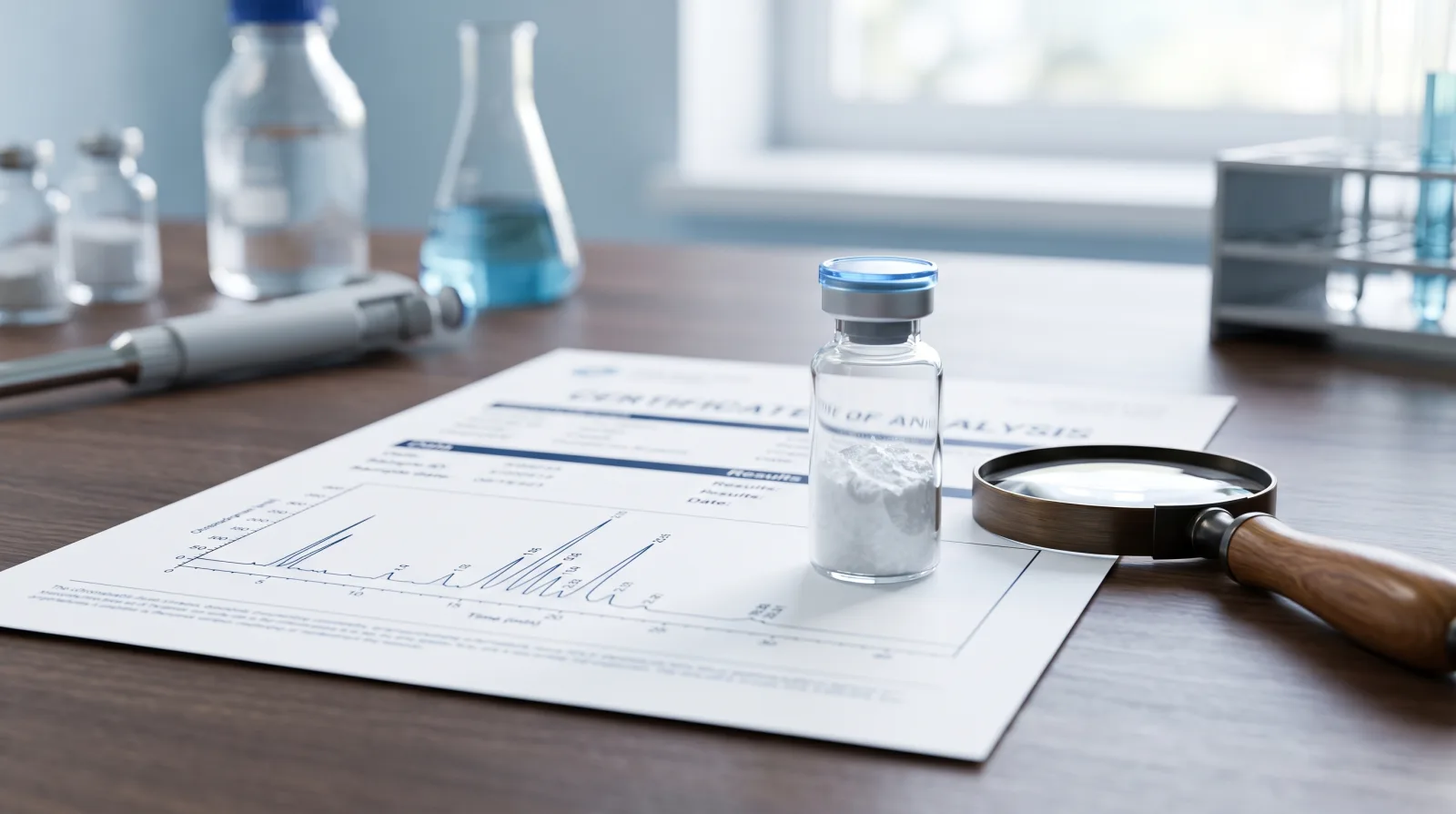
Step 1 — read the COA, not the label
The vial might say "5 mg," but your working concentration depends on net peptide content from the COA. If a 5 mg vial reports 85% net peptide content, you actually have ~4.25 mg of peptide; the rest is bound water and counterion. Use the net figure for anything quantitative.
Step 2 — choose a diluent
Common laboratory diluents are bacteriostatic water (water with 0.9% benzyl alcohol, which limits microbial growth over repeated draws) and 0.9% sodium chloride. Sterile water is used when the benzyl alcohol would interfere. The right choice depends on your assay and stability needs — the vendor COA and insert are your starting reference.
Step 3 — the concentration math
Working concentration is simply net peptide mass divided by diluent volume:
- 5 mg vial × 85% net = 4.25 mg peptide
- Add 2 mL diluent → 4.25 mg / 2 mL = 2.125 mg/mL (2125 µg/mL)
Choose the diluent volume to land on a concentration convenient for your measuring device — net mg divided by the diluent volume you add.
Step 4 — technique that protects the peptide
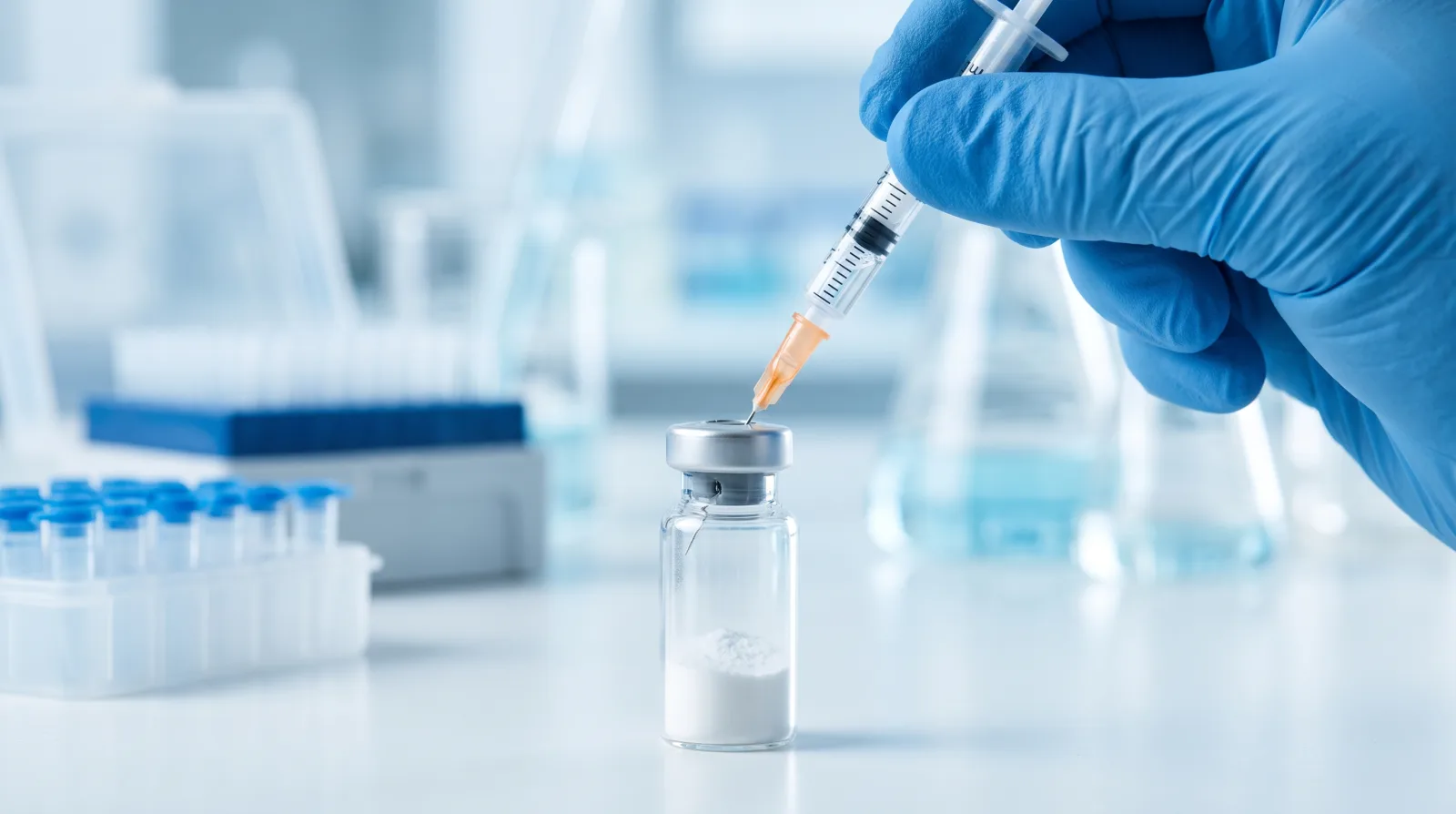
- Add diluent slowly, down the vial wall — don't jet it directly onto the cake.
- Swirl gently; never shake. Shaking shears peptides and creates foam.
- Let it sit a minute to dissolve fully; a clear solution with no visible particulates is the goal.
- Work under aseptic technique to avoid introducing contamination.
Step 5 — storage after reconstitution
Lyophilized powder is the stable form (store at −20 °C, protected from light). Once in solution, peptides are far less stable: refrigerate at 2–8 °C and use within your study window. Minimize freeze–thaw cycles — if you must freeze aliquots, split into single-use volumes so you thaw each only once.
Common mistakes
- Calculating from label mass instead of net peptide content.
- Shaking the vial (foam = degraded material and inaccurate draws).
- Reconstituting the entire vial when the study only needs part of it, then freeze–thawing the rest repeatedly.
- Ignoring diluent compatibility with the downstream assay.
Reconstitution is unglamorous, but it's where a well-characterized reference material either becomes a clean experiment or a confounded one.
For laboratory research use only. Products discussed are reference materials, not drugs or supplements, and are not for human or veterinary use, diagnosis, treatment, or consumption. This article is educational and does not describe or endorse any in-vivo use.